If your business relies on a steady ice supply, reliability is your top priority. But are you truly maximizing your efficiency? Understanding how flake ice is made is the key to slashing energy bills and streamlining your operation. Let’s break down the “freeze-scrape” cycle and see why these machines are the ultimate high-volume workhorses for you.
How is Flake Ice Made?
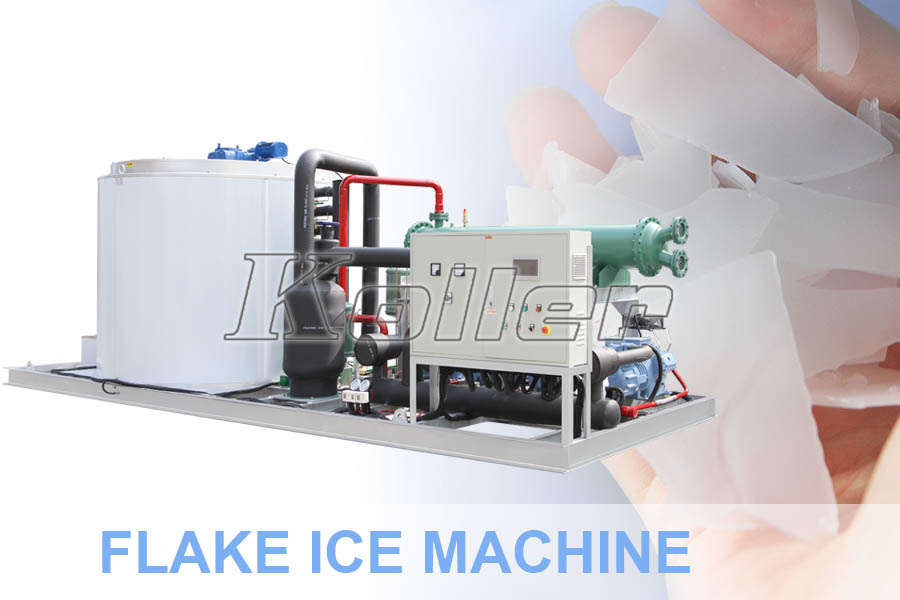
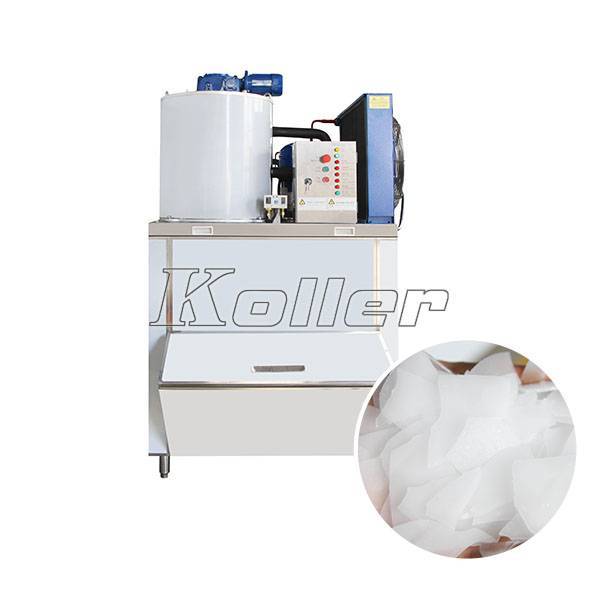
To understand how the machinery works, we first have to answer the basic question: what is flake ice? Essentially, it is a thin, dry, और “sub-cooled” form of ice, usually between 1.5 और 2.5 mm in thickness. Because it’s frozen at such extreme temperatures, it stays “bone-dry.” For you, that means the flakes stay free-flowing in your storage bin and won’t clump together, which is a huge deal if you’re using automated transport systems.
The machine creates this ice through a seamless, 3-step continuous cycle:
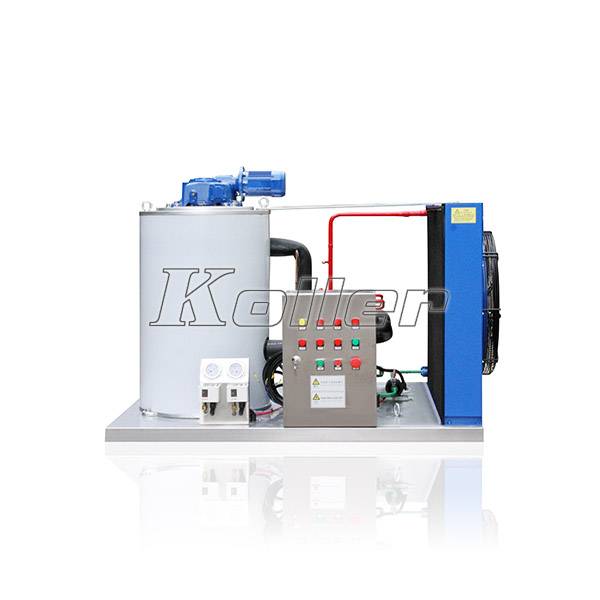
- Uniform Water Distribution: Your machine pumps water into a distribution tray, where it flows in a thin, steady film over the internal freezing surface of a drum.
- Rapid Flash Freezing: Inside the drum walls, a refrigerant (पसंद आर404ए or Ammonia) circulates at an evaporating temperature of around -22°C. This instant heat transfer freezes that water film almost the second it touches the drum.
- Mechanical Scraping: A motorized stainless steel ice knife (the scraper) continuously shears the frozen layer. Since the ice is sub-cooled and brittle, it fractures cleanly into irregular flakes and drops straight into your storage bin.
The Operational Edge: यह “harvest-free” operation means you don’t have to waste energy heating the evaporator to release the ice. You just keep freezing and scraping, making it the most energy-efficient choice for high-volume needs.
फ्लेक बर्फ बनाम. घन बर्फ: Which suits your business?

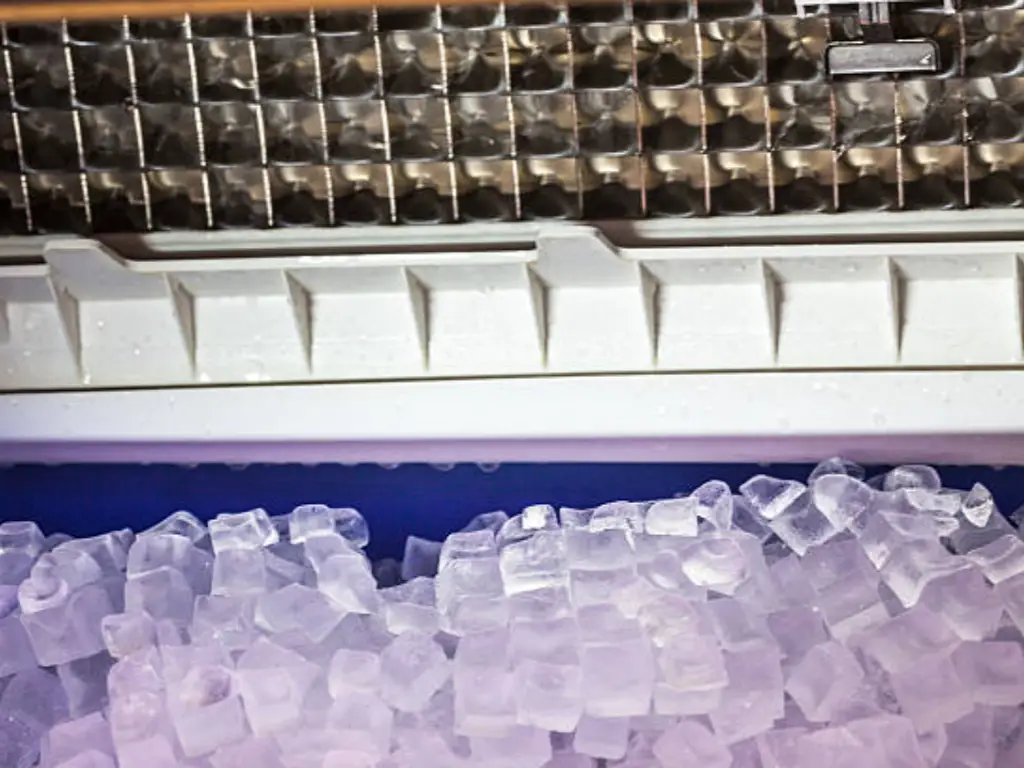
While cube ice is the standard for a beverage, flake ice is the industrial workhorse for preservation and processing.
| विशेषता | बर्फ़ की परत (संरक्षण & औद्योगिक) | घन बर्फ (व्यावसायिक & पेय) |
| Primary Goal | Rapid Cooling: Maximizes surface area for instant heat absorption. | Slow Dilution: Designed to cool liquids gradually while lasting longer. |
| Industry Fit | Seafood retail, Meat processing, Concrete cooling, स्वास्थ्य देखभाल. | बार्स, रेस्टोरेंट, होटल, Coffee shops. |
| लाभ (Pros) | • Soft texture; won’t damage delicate products. • Molds perfectly to any shape. • Most energy-efficient production per ton. | • High aesthetic clarity and premium look. • Melts slowly in carbonated drinks. • High density saves storage space. |
| Disadvantages (Cons) | • Melts faster in open air. • Not suitable for luxury beverages. | • Sharp edges can bruise fresh produce. • Batch “harvest” cycles waste water/energy. |
शीर्ष 5 High-Demand Applications for Flake Ice Machines
The unique way flake ice is made makes it a “must-have” for these specific sectors:
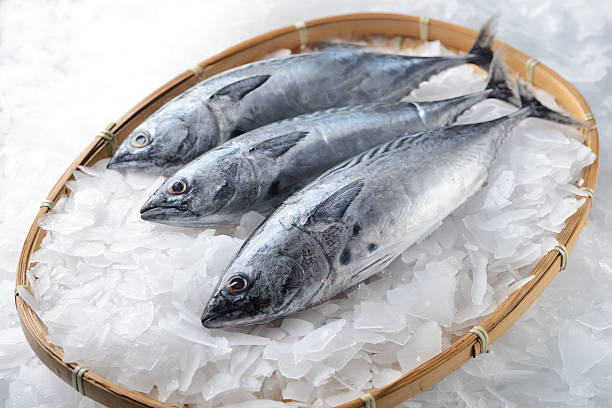
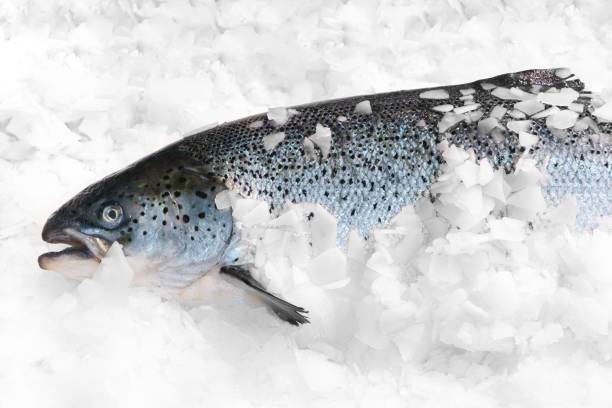
- सीफ़ूड & Fish Retail: It gives you 100% surface contact, keeping your catch hydrated and chilled without the sharp edges that could damage delicate skin or scales.
- मीट संसाधन: During high-speed mixing, flake ice absorbs friction heat instantly. This ensures your fat stays stable and your protein integrity is protected.
- Concrete Cooling: On massive construction jobs like dams, you can mix flake ice directly into the concrete to manage the heat of hydration and prevent the structure from cracking.
- Chemical & Dye Industry: Because it melts so fast, it’s perfect for precise, immediate temperature control in exothermic industrial reactors.
- स्वास्थ्य देखभाल & Labs: Its soft, snow-like texture is ideal for physical therapy and for keeping biological samples stabilized and safe.
KOLLER Flake Ice: Precision Cooling for Industrial Excellence
Key Factors to Consider When Buying a Flake Ice Machine
To ensure your investment pays off over the next decade, you need to look at the engineering and environmental factors that dictate long-term reliability.
Evaporator Design: Stationary vs. Rotating Drums
The evaporator is the most critical component. In the industry, we generally categorize them into two designs:
- Stationary Evaporators: In this design, the drum remains fixed while the internal ice blade rotates. This is widely considered the professional standard because it eliminates the need for rotating refrigerant seals. Since there are no moving parts in the gas circuit, the risk of refrigerant leaks is virtually zero, significantly lowering your long-term maintenance costs.
- Rotating Evaporators: Here, the entire drum spins against a fixed blade. While often cheaper upfront, the rotating seals are prone to wear and tear, which can lead to frequent gas leaks and expensive repairs over time.
Real-World Capacity and Environmental Impact
While a machine might be rated for 10 टन, that number is usually based on ideal laboratory conditions (typically 21°C air and 15°C water).
- The 20% Buffer Rule: I always recommend sizing your machine for at least 20% more than your peak daily requirement.
- Ambient Temperature Sensitivity: As ambient temperatures rise during summer heatwaves, a machine’s output naturally drops. If you operate in a tropical climate, you must check the “corrected capacity” at higher temperatures to ensure you don’t run out of ice when you need it most.
Material Grade and Water Compatibility
The chemistry of your water source dictates the lifespan of your machine’s internal components.
- Freshwater vs. Seawater Models: If you are on a fishing vessel or near a coast, a standard machine will corrode within months. Seawater models must use specialized materials like SUS316 stainless steel or anti-corrosive alloys.
- Food Grade Certification: Ensure the freezing surface is made of high-grade stainless steel (like SUS304) to meet international food safety standards and prevent heavy metal contamination in your ice.
Air-Cooled vs. Water-Cooled Condensers
Your cooling method affects both your electricity bill and your machine’s stability.
- Air-Cooled Condensers: These are easier to install and maintain but rely heavily on ambient air. If your factory is poorly ventilated or gets extremely hot, the machine will struggle to keep up.
- Water-Cooled Condensers: These offer much higher heat exchange efficiency and stable condensing pressures, regardless of the room temperature. They are the preferred choice for large-scale industrial plants, provided you have a reliable water source or a cooling tower.
Smart Control Systems and Protection
Modern industrial machines should be “set and forget.” Look for systems equipped with PLC (Programmable Logic Controller) technology. These systems monitor for things like water shortages, motor overload, and high pressure, automatically shutting down the machine to prevent catastrophic damage before it happens.
अंतिम विचार
Ultimately, the reason flake ice machines are so effective comes down to that ingenious, continuous freezing cycle. By eliminating the need to stop and “harvest” ice using heat, the machine preserves the sub-cooled state of every flake while saving massive amounts of water and electricity.
When you understand the engineering behind the “freeze-scrape” process, you realize why choosing a manufacturer that has mastered this technology is so critical. कोल्लर has spent over two decades perfecting these systems, serving customers in 150 countries with refrigeration equipment built for extreme industrial durability. By matching our technical expertise with your operational needs, you ensure your cooling solution is efficient, भरोसेमंद, and built to last.
Ready to take your cooling efficiency to the next level?
Contact us today to explore our professional-grade flake ice machines and get a custom quote for your business.
अक्सर पूछे जाने वाले प्रश्नों
Q1: How long does an industrial flake ice machine typically last?
With routine maintenance and descaling, a high-quality machine should last 10 को 15 साल. Opting for a stationary evaporator design is key, as fewer moving parts significantly reduce long-term mechanical wear.
Q2: Is flake ice the same thing as “nugget ice”?
Not quite. Nugget ice is compressed and chewy, perfect for beverages. Flake ice is much thinner, drier, and colder, making it the professional standard for food preservation and industrial cooling.
Q3: How often should I clean and descale my machine?
You should deep-clean your system at least every six months. In hard water areas, quarterly descaling prevents mineral buildup on the drum, which keeps your cooling efficiency high and energy costs low.
Q4: Does flake ice require a specific type of storage bin?
हाँ. Since flake ice is less dense than cubes, you need larger, well-insulated bins. Proper insulation prevents the bottom layers from melting and refreezing, ensuring your ice stays loose and free-flowing.
Q5: What are the typical power requirements for these systems?
Most industrial models require a three-phase power supply to support heavy-duty compressors. Always verify your facility’s electrical capacity before installation to ensure the machine runs safely and efficiently.