Idealmente, ice should cool your product, not cut it. Yet, many businesses mistakenly use jagged crushed ice on delicate perishables, leading to bruising, dehydration, and reduced shelf life. Below, we break down why switching to flake ice maximizes freshness and how modern continuous systems can eliminate energy-wasting harvest cycles to lower your operational costs.
Quick Comparison of Flake Ice and Crushed Ice Features
Before diving into the technical details, this comparison table highlights the fundamental differences in shape, feel, and suitability for your specific application.
| Recurso | Crushed Ice | Floco de gelo |
|---|---|---|
| Physical Shape | Fragmented, irregular, “crunchy” pieces that are hard and rigid.” | Macio, flat, irregular pieces resembling snow; flexible. |
| Edge Sharpness | Many sharp edges that poke and scratch. | Flat with no sharp edges. |
| Dureza & Feel | Duro, unyielding chunks. | Macio, moldable, and non-abrasive. Cushioning effect due to ≈73% ice-to-water ratio. |
| Pressure on Product | Concentrates pressure on small, sharp spots (digs into the product). | Spreads weight evenly, acting like a soft blanket. |
| Risk of Damage | Alto. Sharp points can puncture or bruise soft surfaces. | Very Low. Gentle on produce and fragile seafood. |
| Best Applications | Rapid chilling for drinks, where aggressive cooling matters more than protection. | Seafood and meat displays including tuna, shrimp, and sushi; salad bars; medical cold packs. |
How the Production Methods of Crushed and Flake Ice Differ
To understand which ice is right for your business, you must first look at the source. The production method directly dictates the physical form, texture, and ultimate utility of the ice in your daily operations.
Crushed Ice: Secondary Fracturing of Existing Ice
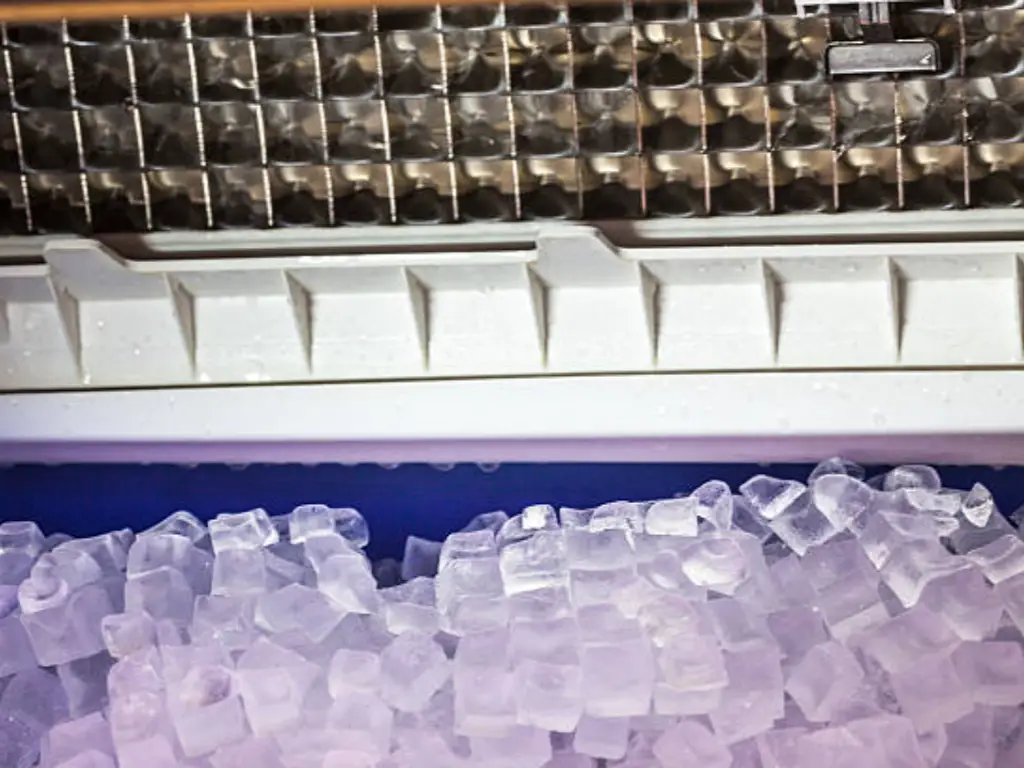
Crushed ice is technically a secondary product. It is formed by mechanically smashing pre-formed standard cubes or larger chunk ice with particles typically measuring 3.2 para 12.7 milímetros. The process involves using crushers, blades, or auger mechanisms to break existing ice forms into smaller fragments. Because it is made by breaking hard ice, the resulting particles retain the hardness and sharp jaggedness of the original block.
Floco de gelo: Direct Production from a Freezing Surface
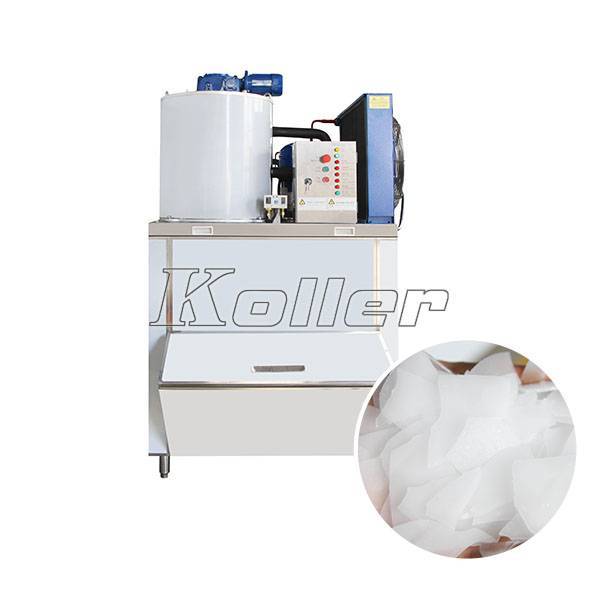
Em contraste, flake ice is produced directly at the freezing surface. The process typically involves a stationary or rotating evaporator drum found in industrial settings. A fixed blade scrapes or removes thin sheets from the ice formed on the drum wall. This method generates thin sheets or flakes, often described as soft, fluffy, and snow-like particles. This direct production process creates small, soft particles that join together, yielding a uniform ice that is easy to mold.
How Resulting Texture Impacts Product Safety
The production method creates a massive difference in physical texture, which is the primary factor in product safety.
- Forma de gelo esmagado: This ice consists of irregular fragments with sharp edges. Instead of lying flat, these angular pieces concentrate pressure on tiny points, much like a sharp pencil tip pressing against skin.
- Flake Ice Shape: Flake ice is characterized by soft, flat, irregular pieces that resemble snow. It typically features a thickness of 1.5 para 3 milímetros. Crucially, manufacturer specifications note that flake ice is flat with no hard edges.
This difference is vital for safeguarding your delicate goods. Crushed ice digs into the product, posing a bruising risk to soft, delicate skin. Floco de gelo, which is about 73% ice and 27% água, is compressible. It cushions your product by spreading the weight over a large area, preventing the bruising or cuts often caused by the rigid, “crunchy” structure of crushed ice.
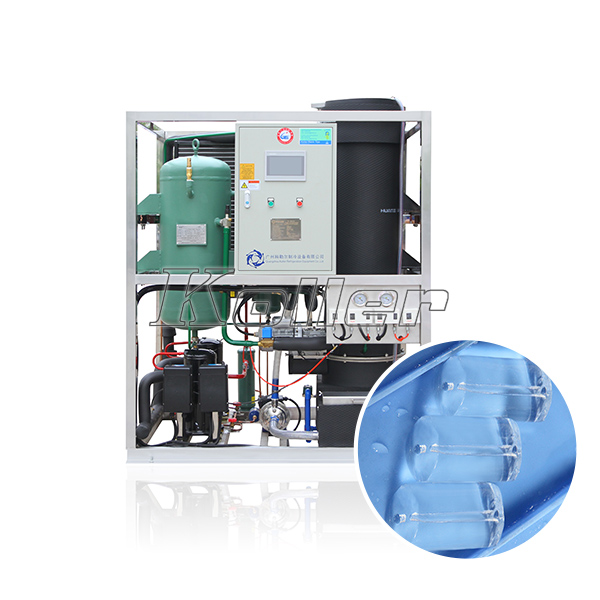
Elevate Your Business with KOLLER’s Advanced Ice Systems
How Surface Area Influences the Cooling Speed of Each Ice Type
Cooling speed is not just about temperature; it is governed by how much ice actually touches your product. A higher surface area means faster cooling.
The Role of Surface Area in Heat Exchange
Both flake and crushed ice have more surface area than traditional cubes, meaning they cool things down faster. No entanto, flocos de gelo, with its thin, plate-like structure, maximizes this contact. Think of it like a wet towel versus a bag of marbles; the towel (flocos de gelo) covers every inch, while the marbles (crushed ice) leave gaps. This full coverage contributes to faster cooling rates, which is a key consideration if your application requires rapid temperature reduction.
Comparing Cooling Performance
While crushed ice provides aggressive cooling, flake ice offers superior efficiency in specific metrics:
- Flake Ice Efficiency: Flake ice is often subcooled to temperatures between -5 and -7°C. Upon melting, it releases 83 kcal/kg of cooling power. Its thin 1.5 para 3 mm flakes maximize surface contact for rapid, efficient heat exchange.
- Crushed Ice Limitations: Crushed ice cools the surface quickly, dropping 15.0°C in 20 minutos, but because the irregular chunks leave air gaps, it struggles to cool deep inside the product. Instead of direct contact, it relies on inefficient air gaps to transfer cold. Industry data indicates this limits cooling deep inside the meat to only a 3.0°C drop, reaching just 32.4°C.
While crushed ice is great for aggressive cooling in beverages, flake ice’s ability to hug the product provides superior contact and overall efficiency for preservation.
Which Ice Type Better Preserves Seafood Freshness and Quality
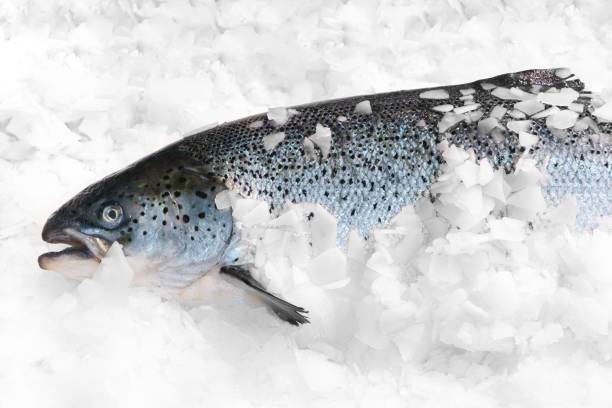
Minimizing Physical Damage to Fish Skin
Delicate fish skin and tissue are highly vulnerable to physical damage. Thin-skinned species and high-value fillets such as tuna and salmon are particularly susceptible.
- Crushed Block Ice Risk: With irregular lumps ranging from 12 para 50 mm in diameter, crushed ice presents a significant risk. FAO guidance notes a risk of large and sharp pieces which can physically damage fish, causing marking and bruising. These cuts and dents allow bacteria to enter and enzymes to release, accelerating spoilage and directly impacting your bottom line.
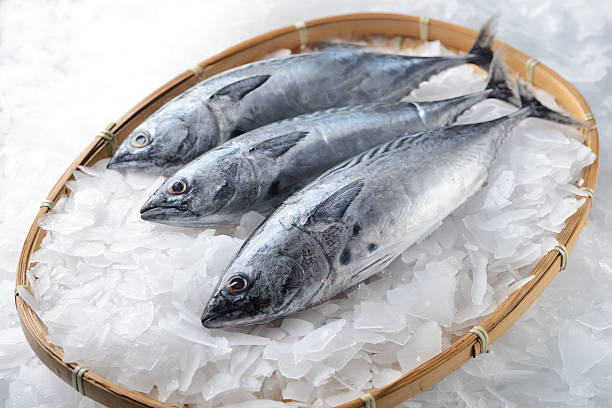
- Flake Ice Protection: Flake ice particles are typically 1.5 para 3 mm thick and about 25 mm across. This small, flat, and thin structure ensures very little or no mechanical damage to fish as per FAO guidance.
Flake Ice as the Gentle Standard for Preservation
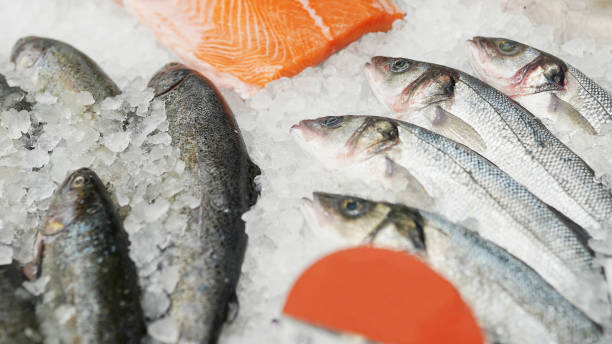
Floco de gelo is widely regarded as the standard for tuna, whole fish, shrimp, meat primals, sushi displays, and medical cold packs. Its huge surface area, which is more than four times that of tube ice, allows for easier, more uniform distribution around your fish. This spreads the load, avoids poking the skin, and prevents scale loss. Adicionalmente, the meltwater from flake ice helps wash and moisten product surfaces, preventing them from drying out—a key factor in maintaining your profitability.
Energy Efficiency and Operational Cost Savings in Ice Production
Beyond preservation quality, the energy efficiency of the ice machine itself is a major factor in your operational costs.
Continuous Flake Ice Efficiency
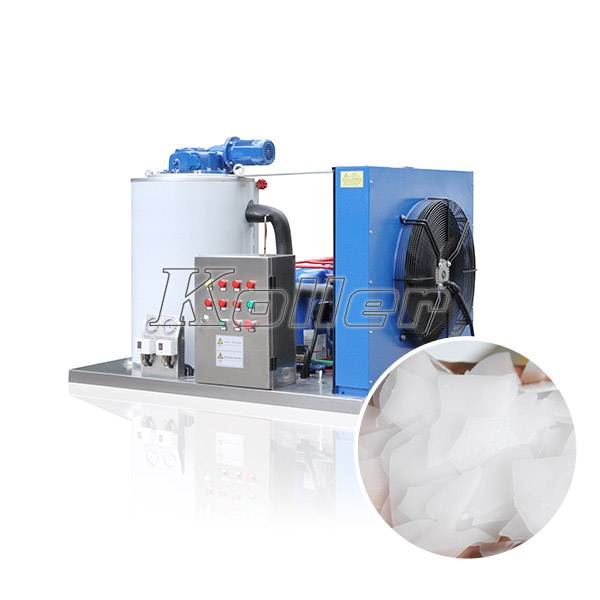
The most significant saving comes from the mechanical difference. Continuous flake ice systems utilize 100% of their refrigeration cycle to freeze water.
- No Harvest Cycle: Unlike batch machines, flake ice machines do not need to reverse the cycle or use hot gas to melt the ice off the evaporator.
- Constant Production: Every kilowatt of electricity is dedicated to freezing, not heating.
Crushed Ice Energy Waste
Crushed ice machines, known as batch systems, are inherently less efficient due to their operational cycle. To release the ice cubes before crushing them, the machine must stop freezing and initiate a harvest cycle, using hot gas to heat the evaporator.
- The Heating Penalty: Guidance from engineering firms notes that in these systems, you are paying for electricity to heat the evaporator you just spent energy freezing.
- Reduced Yield: This process means the machine spends a portion of its duty cycle not making ice, but melting it.
Calculating Your Savings
By switching to a continuous flake ice system, you eliminate the energy-wasting harvest cycle entirely. Adicionalmente, opting for an ENERGY STAR certified model can further boost efficiency, offering approximately 15-16% energy savings compared to standard non-certified models, according to NÓS. EPA data.
Why Industry Leaders Choose Koller for Flake Ice Solutions
The debate between crushed ice and flake ice ultimately comes down to one priority: the integrity of your product. While crushed ice serves its purpose in beverages, its sharp edges and inefficient cooling gaps make it a liability for food preservation. Flake ice offers the superior alternative—cradling your inventory in a soft, continuous blanket of cold that prevents bruising while slashing energy costs.
No entanto, the quality of your ice is only as good as the machine that produces it. This is where Koller stands apart.
Desde o seu estabelecimento em 2004, Koller has evolved from a manufacturer into a leading innovator in the refrigeration industry. Backed by a team of over 30 dedicated engineers, Koller designs systems that exceed rigorous international standards, delivering products capable of meeting HACCP and FDA certification requirements for food safety.
Why partner with Koller?
- World-Class Components: Koller’s flake ice machines are built with the industry’s most trusted components, explicitly featuring Bitzer, Copeland, and Refcomp compressors. This ensures robust performance and stability, even in demanding environments.
- Intelligent Operation: Designed for efficiency, their systems feature automatic intelligent control, allowing for precise temperature setting and automatic defrosting to minimize energy consumption and human error.
- Built to Last: Utilizing high-quality materials like stainless steel 304 e 316, Koller’s evaporators and parts are engineered for strong corrosion resistance and a long operational lifespan, ensuring your investment pays off for years to come.
Investing in Koller means securing operational stability and product safety, verified by over two decades of industry experience.
Ready to upgrade your preservation strategy with a proven partner?
Contact us today to consult with a Koller refrigeration expert and find the perfect solution for your business.
Perguntas frequentes
Is Crushed Ice the Same as Flake Ice?
Não, crushed ice and flake ice are not the same. Crushed ice is made by smashing hard cubes into smaller, sharp pieces. Flake ice is made by freezing thin layers of water on a drum and removing them as soft, snow-like flakes that are easy to mold and won’t bruise delicate items like seafood.
Which Ice Cools Faster, Crushed or Flake?
It depends on how you measure it. Crushed ice is denser, so a bucket of crushed ice has more “cold power” than a bucket of fluffy flake ice. No entanto, Flake ice cools better for food because it hugs the product closely without leaving air gaps, whereas crushed ice leaves pockets of air that slow down cooling.
Can I Use Crushed Ice for Concrete Cooling?
Sim, crushed ice can be used for concrete cooling as a direct substitute for mixing water, provided it is fully melted during mixing. It helps lower the temperature of the mix by up to 11°C to prevent cracking during curing.
Why Is Flake Ice Preferred for Seafood Displays?
Flake ice is preferred for seafood displays because its soft and has no sharp edges, so it won’t scratch or bruise delicate fish skin. It also packs tightly around the fish to keep it cold evenly, which helps keep the fish looking fresh for customers.
Does a Flake Ice Machine Use Less Electricity?
Geralmente, yes—if you choose a continuous system. While the power to freeze water is the same, continuous máquinas de gelo em flocos are often more efficient than batch machines such as cube crushers because they don’t waste energy on harvest cycles where ice must be melted to be released.
Can I Make Crushed Ice With a Flake Machine?
Não, you cannot make crushed ice with a flake ice machine. Flake machines are designed to produce thin, flat sheets. Crushed ice requires a machine that makes hard blocks or cubes and then physically breaks them.