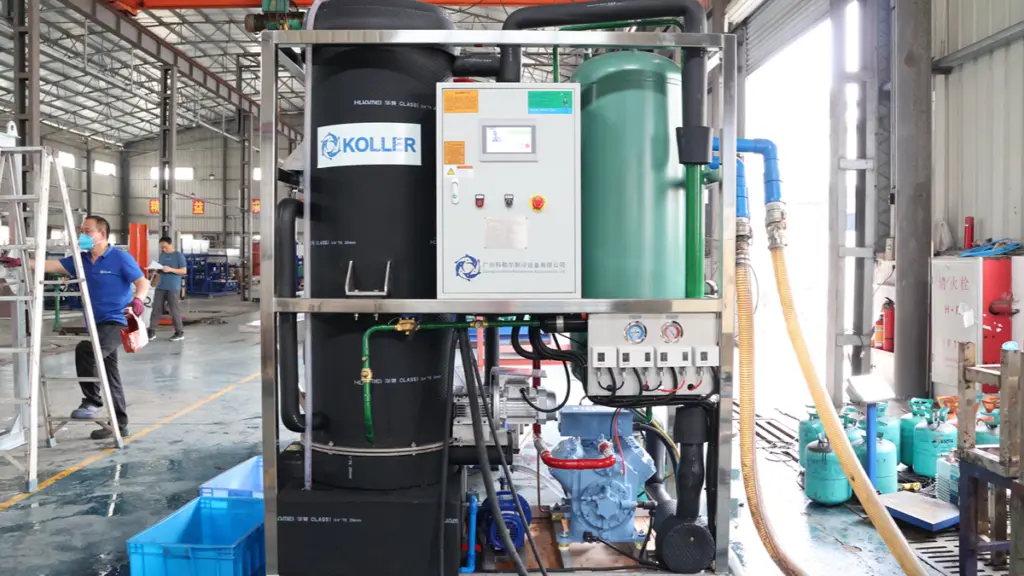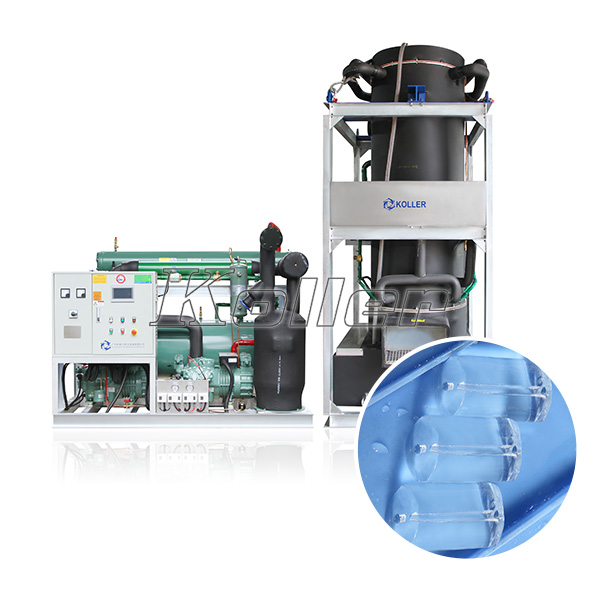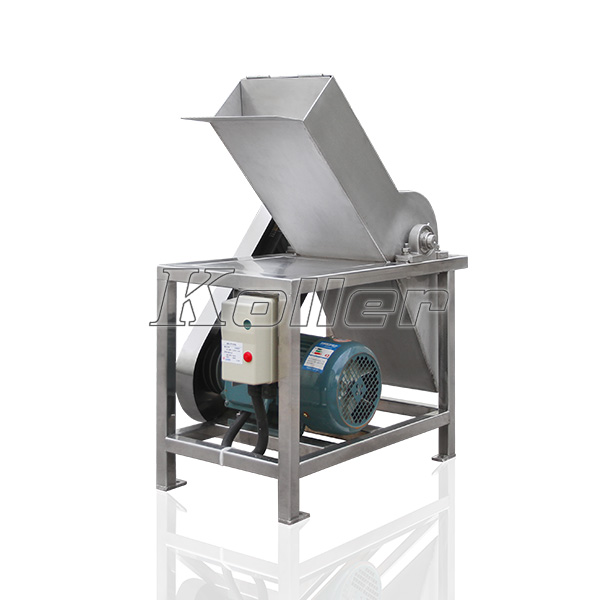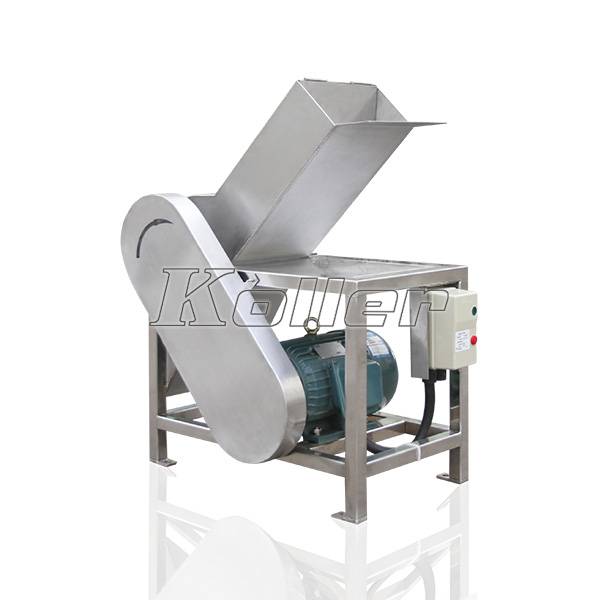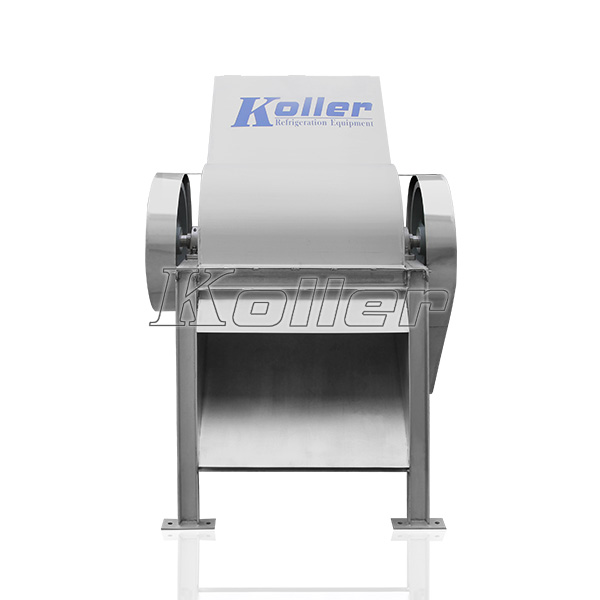
Resolving Common Problems with Industrial Ice Crusher Machines and How to Fix Them is critical to preventing sudden motor failures and unplanned production stops. When severe mechanical stress meets freezing, wet environments, unmanaged equipment wear directly threatens daily B2B plant margins and drives up warranty claims.
This analysis benchmarks system-level failures against standard operational baselines. We evaluate motor current spikes up to 20 percent and physical blade clearance calibrations to help you secure a reliable, high-throughput production line.
Why Industrial Ice Crushers Experience Problems
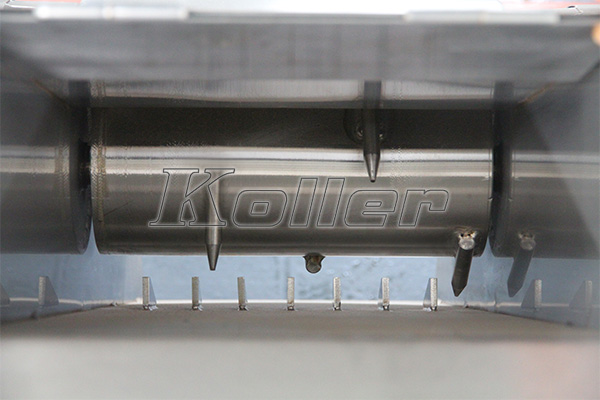
Industrial ice crushers fail when mechanical overload meets cold, wet environments. Proper feeding controls and low-temperature lubrication stop these chronic breakdowns before they halt production.
Mechanical Stress and Overloading Issues
Crushing dense ice blocks subjects blades, teeth, and liners to relentless high-impact cycles. Im Laufe der Zeit, this constant mechanical stress warps rotors and cracks structural housings.
Operators often trigger motor overcurrent shutoffs by dumping oversized blocks or overfilling the hopper. This immediately jams the crushing chamber, forcing the system to draw excessive current.
Sudden, uneven material drops generate severe shock loads across the drive train. These sudden spikes in resistance snap drive belts, damage couplings, and strip gear teeth.
Environmental Stressors and Integration Failures
High humidity and freezing temperatures cause ice dust and meltwater to refreeze inside the machine. This buildup quickly chokes discharge chutes, causing severe backpressure and clogging the entire chamber.
Water intrusion washes away grease, while using the wrong lubricants in cold environments leads to oil starvation. This combination destroys internal bearings, leading to violent machine vibration and eventual shaft seizure.
Unmaintained upstream refrigeration units cause serious integration failures. Hard water scale creates denser, harder ice, while erratic ice delivery starves or overloads the crusher, dragging down daily throughput.
Machine Won’t Start
A non-starting ice crusher typically stems from power supply failures, tripped safety interlocks, motor winding faults, or physical ice jams in the crushing chamber.
Electrical Diagnostics and Safety Interlocks
Before touching internal components, verify the incoming power supply, branch circuit breakers, and industrial disconnect switches. Tripped breakers or loose disconnects often cut power before it reaches the machine.
Nächste, inspect the power cord and internal connections. Look for visible burns, insulation cracks, or loose terminals that disrupt the current flow. You must replace any damaged cords immediately.
Use a multimeter to test the main On/Off switch and start/stop buttons for continuity. If the switch shows no continuity when actuated, replace it to restore the circuit.
Examine safety devices, including lid switches, door interlocks, and bin sensors. Misaligned doors or fouled sensors prevent proper mechanical alignment and electrical engagement, blocking the start command.
Endlich, reset any tripped motor overload relays. You also need to measure the control transformer output voltage to ensure the control circuit receives stable power.
Motor Operation and Mechanical Blockage Clearance
Check for voltage delivery at the motor terminals when you issue a start command. If the contactor coil energizes but no voltage reaches the motor, a failed contactor is the likely cause.
Test motor winding resistance with a multimeter to ensure it matches baseline specs. At the same time, inspect the start and run capacitors for physical swelling, oil leaks, or casing damage.
Perform full lockout/tagout (HERZ) procedures before clearing any physical ice jams or foreign debris from the crusher chamber. Never reach into the hopper without isolating the power source.
Examine the cutter blades, rotor shaft, and bearings. Misaligned components or seized bearings increase mechanical drag, causing structural alignment issues that stall the rotor.
Clean the condenser coils and maintain at least six inches of airflow clearance around the assembly. Proper ventilation prevents thermal overload trips that shut down the motor.
Boost Efficiency With Heavy-Duty Ice Crushers
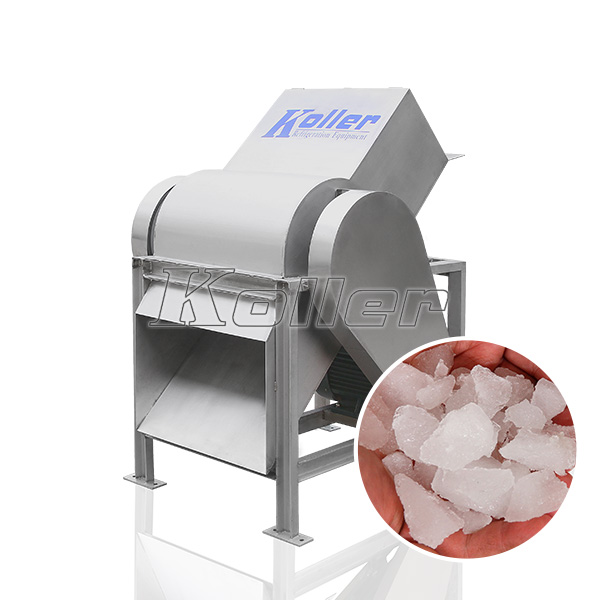
Low Crushing Efficiency or Reduced Capacity
Maximize crusher throughput by correcting blade wear, optimizing upstream ice machine cycles, and maintaining proper cooling and water pressure parameters.
Reduced hourly throughput in industrial ice crushers rarely stems from a single isolated mechanical failure. Often, a drop in capacity indicates a combination of cutting surface wear and upstream refrigeration constraints that starve the hopper.
Mechanical and System-Level Causes of Reduced Throughput
Mechanical drag, incorrect physical alignment, and environmental heat loads degrade the system’s ability to process ice efficiently. The primary drivers of this capacity drop include:
- Dull or damaged blades: Rounded, chipped, or misaligned crushing blades increase cutting resistance inside the chamber, slowing the rotor and dropping hourly output.
- Over-tensioned motor mounts: Rigid or incorrectly tensioned motor mounts prevent necessary belt slippage during heavy load spikes, leading to frequent motor overloads and system trips.
- Upstream ice machine limitations: Evaporator scaling, incorrect harvest cycle settings, or low refrigerant levels restrict the total volume of ice fed to the crusher.
- Inadequate water supply: Incoming water pressure below 20 psi or clogged inlet water filters directly decrease the ice mass production rate of the integrated ice maker.
- High ambient temperatures: Room temperatures exceeding 38 °C impair condenser heat rejection, lowering overall refrigeration capacity and starving the crusher’s feed line.
Diagnostic Procedures and Corrective Actions for Capacity Recovery
Systematically testing both the crushing mechanism and the integrated ice-making machinery helps isolate and resolve performance bottlenecks.
- Measure actual throughput: Conduct timed weight-based tests to compare actual ice delivery against nominal manufacturer specifications.
- Restore drive line alignment: Inspect and adjust belt tension weekly while greasing bearings to reduce friction-related speed loss.
- Calibrate cycle parameters: Fine-tune freezing and de-icing cycle times to ensure a steady ice feed to the crusher without accumulation blocks.
- Address scale and water flow: Perform a weekly water tank purge and integrate water softeners to prevent heat-transfer loss from mineral scale on evaporators.
- Implement structured maintenance: Execute a monthly maintenance plan that covers compressor amperage checks and thorough cleaning of condenser coils.
Uneven Ice Particle Size
Uneven ice particle size stems from worn mechanical clearances and erratic feedstock variables. Tightening tolerances and regulating feed rates preserves product consistency.
Crushing systems require stable inputs and rigid geometry to achieve uniform results. When feedstock parameters or mechanical alignments drift, the physical mechanics of fracturing fail, shifting the system from clean shearing to random breaking. This variance directly impacts downstream melting rates and processing efficiency.
Mechanical and Feedstock Drivers of Particle Variance
Uniform sizing depends on how the ice behaves when it hits the rotor and how consistently it flows through the chamber. Five primary factors drive size variance:
- Feedstock Dimensions: Inconsistent block sizing and excess surface moisture cause clumping, bridging, and unpredictable fracturing.
- Temperature Variance: Excessively cold ice shatters into fine dust, while warm ice smears and compresses into large agglomerates.
- Improper Clearance Gaps: Uneven gaps between cutting blades and the sizing screen across the chamber width let large pieces pass through untouched.
- Rotor and Shaft Misalignment: Rotor imbalances distort mechanical tolerances, creating vibration and uneven impact forces inside the chamber.
- Dull Cutting Blades: Worn edges fail to shear the ice cleanly, shifting operation from precise cutting to random, chaotic fracturing.
Calibration and Maintenance Protocols for Size Uniformity
To maintain a tight particle distribution, maintenance teams must implement structured calibration routines. This prevents operational drift and protects downstream machinery:
- Gap Calibration: Calibrate the clearance between the blades and screens to align with your target output specifications.
- Feed Regulation: Install automated belt or screw feeders to deliver a steady feed rate, eliminating surge loads and idle periods.
- Blade Maintenance: Establish strict sharpening and rotation schedules to keep cutting edges sharp and symmetrical.
- Dynamic Rotor Balancing: Run periodic balance and alignment checks to stop vibration-induced gap changes.
- Systematic Sieve Analysis: Perform routine sieve testing and screen wear inspections to identify damaged meshes before they fail.
Excessive Noise and Vibration
Unchecked ice crusher noise and vibration signal imminent mechanical failure. Pinpointing rotor imbalance and structural resonance early protects your motor and prevents costly, unplanned production halts.
Mechanical instability is never random. When your ice crusher starts shaking or screaming, it is responding to specific physics-based triggers within the drive train, frame, or feed system. If you run the machine continuously in this state, you will drastically shorten component life.
- Component Wear and Imbalance: Worn bearing races, damaged shafts, and unevenly distributed rotor hammers trigger high-frequency cyclic vibrations.
- Structural and Installation Flaws: Loose anchor bolts, cracked concrete foundations, and a lack of rubber damping pads propagate resonance throughout the crusher frame.
- Process and Operating Conditions: Feeding oversized ice blocks or overloading the chamber creates severe impact shocks and transient load spikes.
- Friction and Clearance Issues: Insufficient lubrication in gears and increased clearance from worn cutting knives lead to metal-on-metal collisions and high-pitched squealing.
Ignoring these early warning indicators directly leads to motor winding burnout and shaft deformation. You must isolate and address these issues at the source before they cascade into catastrophic equipment failure.
Diagnostic Protocols and Mitigation Strategies
Restoring baseline stability requires a dual approach of objective measurement and physical isolation. Relying on guesswork will only cost you more in spare parts and technician hours.
- Sensory and Instrumented Diagnostics: Operators use sound level meters, infrared thermometers, and vibration spectrum analyzers to locate bearing defects and mechanical drag.
- Structural and Mechanical Interventions: Regular dynamic balancing of high-speed rotors, precise shaft alignment, and periodic fastener torque checks eliminate structural rattles.
- Vibration Isolation and Acoustic Barriers: Installing rubber anti-vibration mounts, flexible pipe couplings, and steel soundproof enclosures lined with acoustic cotton absorbs airborne noise.
- Routine Maintenance and Safety Protocols: Implementing daily check logs and providing operators with noise-canceling ear protection prevents occupational hazards and unexpected downtime.
Instruct your operators to log vibration baselines weekly. Catching a minor spike in bearing temperature or motor current early allows you to schedule a quick, low-cost bearing swap during a planned shift change rather than replacing a seized motor during peak production hours.
Blade Wear and Damage
Dull or damaged crusher blades destroy throughput, spike motor amperage, and threaten downstream process consistency. Catching micro-chipping early prevents catastrophic mechanical failure.
Identifying Blade Damage and Operational Signs
Crusher blades run in a brutal environment. Constant impact from dense ice blocks and hidden impurities degrades the steel, forcing the drive motor to work harder. We monitor these primary physical wear symptoms during scheduled maintenance:
- Edge Rounding: The initial loss of a sharp cutting profile.
- Chipping and Cracks: Structural fractures that can worsen quickly under load.
- Misalignment Patterns: Uneven wear indicating the blade set is running off-center.
- Surface Degradation: Pitting, Rost, or spalling from moisture exposure.
Operational warning signs often emerge before you can shut down the machine for a visual check. Watch for these indicators during standard production:
- Throughput Drops: A sudden or gradual decrease in processed ice volume.
- High Vibration: Structural shaking caused by an unbalanced rotor weight.
- Grinding Noise: Unusual metallic sounds inside the crushing chamber.
- Uneven Product: Shards and oversized chunks bypassing the sizing screen.
To catch this micro-damage early, we recommend a strict inspection schedule every shift or every four hours of active operation. Operators should use a 10x loupe during these checks, as you can rarely spot early micro-chipping with the naked eye.
Maintenance Practices and Replacement Guidelines
Do not delay corrective action when a shift inspection reveals damage. Sharpen dull edges immediately to restore cutting efficiency, realign any skewed blade sets, and replace cracked blades before they shatter. If your system uses reversible blades, rotate them to the unused edge to extend their service life.
Preventative habits save motors and limit downtime. We track motor amperage under load because a 15% Zu 20% rise in current draw signals severe blade drag. To protect your backup inventory, store spare blades in a controlled environment below 60% relative humidity to block oxidation on carbon steel edges.
Even with regular sharpening, blade life is finite. We structure full replacement schedules around active run hours and wear indicators:
- Heavy-Duty Systems: Replace the complete blade set every 6 Zu 12 Monate.
- Light-Duty Systems: Extend the replacement interval up to 18 months under lighter usage.
Motor Overheating Issues
Overloaded hoppers, blocked vents, and voltage drops trigger motor overheating. Active diagnostic testing and strict feed limits prevent critical winding failures.
Running an industrial ice crusher continuously under harsh conditions eventually stresses the drive motor. Recognizing early symptoms saves winding insulation from permanent degradation.
Common Causes and Warning Signs of Overheating
Run-to-failure operation often masks serious internal damage. Operators must actively monitor the equipment for physical warning signs. A motor frame that is too hot to touch for more than a few seconds, frequent tripping of the branch circuit breakers, or a distinct burnt varnish odor all signal that the motor is running well past its thermal limit.
These symptoms typically stem from three specific operational failures:
- Mechanical Overload: Overfilling the feed hopper or attempting to process dense, oversized ice blocks drives up torque demand, forcing the motor to draw current beyond its rated capacity.
- Airflow Restrictions: Ice dust, fine debris, and stray packaging materials easily block cooling vents and pack the heat-dissipating fins, trapping heat inside the housing.
- Electrical Supply Anomalies: Long cable runs in damp environments cause voltage drops, while loose terminals and phase imbalances skew current distribution and spike operating temperatures.
Diagnostic Steps and Corrective Actions
Pinpointing the exact cause of a hot motor requires a structured inspection workflow. Guesswork leads to repetitive failures and unnecessary part replacement.
- Thermal Scanning: Use an infrared thermometer to measure temperatures on the frame and bearing housings. Concentrated heat at a single bearing housing points to mechanical misalignment or lack of grease, while a uniformly hot frame indicates electrical overload.
- Amperage Checks: Clamp a multimeter around the phase wires under normal load. Readings higher than the nameplate full-load current verify that the motor is working against too much resistance.
- Insulation Testing: Check the insulation resistance of the stator windings using a megohmmeter. Low resistance readings confirm that moisture from melting ice or washdowns has bypassed the seals and compromised the internal coils.
- Routine Maintenance: Clear the cooling fins with compressed air, swap out worn or noisy bearings, and set controlled feed rates to stabilize current draw.
Uncoupling the motor provides immediate diagnostic clarity. If the uncoupled motor runs cool on its own, the overheating is entirely caused by downstream mechanical resistance, such as dull blades or a jammed crushing chamber.
Ice Blockage and Feeding Problems
Unstable ice feed and mechanical wear cause hopper bridging and chamber jams. Prevent shutdowns with variable-speed metering, strict LOTO protocols, and sharp cutter maintenance.
Common Symptoms and Causes of Feeding Interruptions
Ice flow disruptions stop production and stress the drive train. Recognizing the early warning signs keeps small flow issues from turning into catastrophic mechanical failures.
- Warning Signs: Monitor motor current fluctuations, chamber compaction, and feed hopper bridging where ice forms hollow arches above the rotor.
- Physical Properties: Sub-cooling, high surface moisture, and uneven chunk sizes trigger interlocking. Wet ice refreezes into solid clumps on cold contact surfaces.
- Feeding Errors: Choke feeding and dumping bulk batches exceed design capacity. Hopper walls shallower than 60 Zu 70 degrees stall gravity flow.
- Mechanischer Verschleiß: Dull cutter blades, incorrect clearances, and shaft misalignment increase cutting resistance and wedge ice in the crushing zone.
- Environmental Factors: High ambient humidity builds thick frost around inlets. Inadequate meltwater drainage pools water that quickly refreezes into solid plugs.
Our team monitors motor amperage trends. A steady 15% rise under identical loads almost always points to blade wear or localized compaction before a physical jam occurs.
Preventive Maintenance and Safe Clearing Protocols
Preventing feed failures requires a mix of smart material handling and rigid safety enforcement. When jams occur, clearing them must follow a non-negotiable sequence.
- Feed Optimization: Install variable-speed screw conveyors or metered hoppers. Wall vibrators, pneumatic knockers, and steep wall angles keep ice moving.
- Scheduled Routines: Sharpen blades regularly and replace worn chamber liners. Stabilize voltage within 5% to prevent motor stalls under sudden surge loads.
- LOTO Protocols: Isolate main power switches before opening any access panels. Lockout-tagout is mandatory; never rely on simple interlocks or emergency stops.
- Safe Clearing: Use long pry bars, hooks, or automated hydraulic arms to break compacted blocks. Keep hands and metal wedges out of the cutting chamber.
- Restart Sequence: Check for damaged teeth or misaligned shafts before re-energizing. Run the machine empty for several minutes to verify smooth rotation.
We enforce a strict zero-tolerance policy on manual clearing. Tools must do the work, and the drive must run uncoupled first to confirm the shaft is straight.
Electrical and Sensor Failures
Voltage instability and fouled sensors trigger most unexpected industrial ice crusher shutdowns. Rigorous diagnostics and VFD upgrades prevent these electrical faults.
Industrial ice crushers operate in wet, high-vibration environments that degrade electrical components rapidly. When systems fail to start or shut down unexpectedly, we trace the root cause to four primary failure modes:
- Voltage Imbalances: Power supply fluctuations exceeding ±10% of the nominal rating force the motor to draw excess current, causing thermal trips.
- Control Circuit Degradation: Damaged contactors, worn relays, and failing low-voltage control circuits disrupt steady operation and cause chattering.
- Sensor Obstruction: Scale, ice dust, and moisture misalign or foul bin level, float, and proximity sensors, sending false “bin full” signals.
- Thermostat Drift: Drifted thermistors and failing mechanical safety thermostats trigger premature safety shutdowns even when actual temperatures remain safe.
Moisture ingress combined with continuous structural vibration accelerates these failures, turning minor contact oxidation into complete system lockouts.
Systematic Diagnostics and Preventive Upgrades
Restoring reliability requires a disciplined diagnostic routine paired with modern hardware protection. We recommend the following systematic approach to protect the processor’s electrical infrastructure:
- Diagnostic Protocols: Establish clear diagnostic steps to isolate individual sensors and test circuit continuity using multimeters and megohmmeters.
- Environmental Control: Clean and calibrate sensors monthly, and seal control cabinets to prevent moisture from bridging terminals.
- VFD Retrofitting: Install variable frequency drives to control startup inrush currents, reduce mechanical shock on the drive train, and prevent voltage sags.
- Smart Monitoring: Deploy smart sensors and remote monitoring tools to track temperature, current, and vibration trends for predictive warnings.
By sealing junction boxes and shifting to variable speed controls, operators routinely cut electrical failures by over fifty percent.
Preventive Maintenance Best Practices
Proactive inspections and structured maintenance schedules eliminate unplanned shutdowns, preserve ice sanitation, and protect motor assemblies from catastrophic mechanical overload.
| Interval | Target Area | Action Required |
|---|---|---|
| Täglich | Operational Safety | Run safety interlock tests and monitor operational noise levels. |
| Wöchentlich | Visual Integrity | Check structural fasteners, examine power cords, and confirm clear air paths. |
| Monatlich | Mechanical Care & Hygiene | Inspect blade edges, apply food-grade grease, and descale water system lines. |
| Quarterly / Annually | Professional Servicing | Analyze motor current draw, evaluate bearing play, and test electrical control systems. |
Interval-Based Scheduled Maintenance Checklists
Maintenance teams must follow a strict calendar of inspections to stop small component wear from turning into catastrophic system failures.
- Daily Tasks: Conduct daily operational checks, including safety interlock tests and noise monitoring, to catch early signs of blade or bearing wear.
- Weekly Tasks: Perform visual walk-arounds to inspect structural fasteners, check power cords for damage, and maintain proper ventilation clearances around the unit.
- Monthly Mechanical Care: Evaluate blade sharpness, adjust mechanical alignment, and apply food-grade lubricants to protect moving parts.
- Monthly Water System Sanitation: Run descaling and sanitizing cycles on integrated machines to remove scale buildup and keep ice contact paths clean.
- Quarterly and Annual Servicing: Schedule professional inspections to analyze motor current draw, evaluate bearing play, and test electrical control systems.
Operational Best Practices and Failure Prevention Strategies
Operators dictate the actual lifespan of the machine. Implementing smart operational boundaries limits daily structural strain.
- Feedstock Selection: Use fresh ice blocks instead of stale or refrozen ice to lower mechanical resistance on the blades and drive system.
- Capacity Limits: Respect the rated capacity limits of the machine to prevent motor burnout, belt slippage, and premature bearing failure.
- Machine Positioning: Keep the unit level on a clean, flat surface to ensure even bearing loads and avoid internal component misalignment.
- Moisture Management: Maintain moisture barriers around control enclosures and dry all detachable components thoroughly before reassembling the unit.
- Operation Logs: Keep detailed maintenance logs of inspections, blade changes, and water filter replacements to identify operational patterns and prevent unscheduled downtime.
When to Replace vs Repair Your Machine
Replace industrial ice crushers when repair costs exceed 50% of a new unit or the machine exceeds eight years of service with recurring component failures.
Der 50 Percent Cost Rule and Service Life Milestones
Industrial ice crushers face brutal mechanical wear. Balancing repair costs against the equipment’s remaining operational lifespan requires a clear, math-based decision framework.
- Financial threshold: Replace the industrial ice crusher if the repair quote exceeds 50% of the cost of a brand-new machine.
- Service life milestones: Favor repairs for machines under 5 years old. Lean toward replacement as units approach their 8-to-10-year limit.
- Repair expense ranges: Expect typical repair costs to run between $150 Und $600. Major overhauls, like compressor replacements, spike from $1,200 Zu $3,000.
- Total cost of ownership: Calculate the impact of declining energy efficiency, higher water usage, and expensive downtime when assessing an aging unit.
Sticking with an inefficient machine just because it still runs ignores the hidden drag on your margins. Old motors draw more power and cause unpredictable line stoppages.
Operational Symptoms and Actionable Decision Checklists
Identifying whether a breakdown is an isolated event or a symptom of systemic failure keeps your line running without wasting capital.
- Symptoms favoring repair: Address isolated mechanical wear, damaged seals, clogged filters, and minor electrical faults through targeted repairs.
- Symptoms favoring replacement: Identify system-wide wear through indicators like recurring breakdowns, abnormal noise, and declining ice quality.
- Actionable repair checklist: Inspect for physical ice jams, clear dirty condenser surfaces, and check basic electrical connections before writing off the machine.
- Actionable replacement checklist: Review maintenance logs for frequent failures over the past 12 months and verify replacement parts availability.
If components are discontinued or require multi-week lead times, keeping an old crusher on life support risks catastrophic downtime during peak production.
Häufig gestellte Fragen
Why is my ice crusher not crushing properly?
Poor crushing performance usually stems from a few mechanical or electrical bottlenecks. Check your power supply first; unstable voltage drops motor torque. Inspect the crushing chamber for dull, bent, or misaligned blades, and verify that the gap between the blades and stationary surfaces matches manufacturer specs. Endlich, ensure the feed system is clear of ice bridges and check that your upstream ice maker produces solid, fully frozen ice instead of soft, wet pieces that clog the blades.
Why is the machine making unusual noise?
Unusual noises signal specific mechanical faults. Rattling or buzzing points to loose panels, guards, or motor mounting bolts. Grinding, rumbling, or high-pitched whines indicate worn or dry bearings that need lubrication or immediate replacement. Metallic scraping suggests a bent shaft, misaligned rotor, or worn liners inside the chamber. If you hear intermittent clanking, a foreign object like a tool or packaging fragment has entered the ice path. Stop the machine immediately to inspect the feed hopper.
How often should crusher blades be replaced?
For industrial ice crushers in continuous commercial use, plan to replace standard alloy blades every 2 Zu 4 Monate. High-speed tool steel (HSS) or carbide blades can last 6 Zu 12 months with proper maintenance. Always replace blades immediately if you notice visual cracks, severe chips, persistent vibration, A 15% Zu 20% rise in motor amperage, or a significant drop in throughput and particle uniformity.
Why is my motor overheating?
Motors overheat when thermal energy builds up faster than the cooling system can dissipate it. Common causes include mechanical overload from feeding ice too quickly, jammed blades, or overtight drive belts. Electrical issues like phase voltage imbalance, low voltage, or high harmonics from variable frequency drives (VFDs) also raise winding temperatures. Endlich, check for blocked cooling vents, a broken fan, high ambient room temperatures, or worn bearings that create high friction drag.
What causes uneven ice particle sizes?
Inconsistent particle sizes typically result from an uneven feed rate, such as batch-dumping ice instead of maintaining a steady flow. Worn internal blades, jaw plates, or liners allow larger fragments to pass through without being crushed. Incorrect machine calibration, high temperature variations in the feed ice, and using mixed or non-uniform ice cube sizes before crushing also lead to a highly irregular output profile.
Why does ice get stuck in the machine?
Ice jams occur when you overload the feed hopper, compacting the ice under its own weight before it reaches the blades. High ambient humidity or warm storage temperatures cause ice to partially melt and refreeze into large, solid clumps (bridging). Using soft, wet ice creates a slushy paste that easily obstructs discharge chutes. Zusätzlich, dull blades, worn bearings, or starting the machine with a pre-loaded crushing chamber will stall the rotor and trap ice inside.
Can dull blades damage the motor?
Ja. Dull blades cannot cut ice cleanly, forcing the machine to grind and compress the material instead. This dramatically increases cutting resistance and shaft torque, driving motor amperage 15% Zu 20% above normal levels. Running the motor continuously at this elevated current generates excessive heat, accelerates winding insulation breakdown, strains drive belts, and risks catastrophic rotor stalls.
What preventive maintenance is required?
A robust maintenance program is essential to prevent unplanned downtime. Daily tasks include visual inspections for leaks, clearing residual slush from the hopper, and sanitizing food-contact surfaces. Wöchentlich, check blade sharpness, tighten mounting bolts, inspect belt tension, and clean motor vents. Monatlich, lock out power to perform deep cleaning, check gearbox oil, and lubricate bearings. Schedule professional inspections twice per year to test electrical contacts, verify current draw, and replace worn bearings or seals before they fail.
Abschließende Gedanken
While low-cost crushing equipment reduces your initial capital outlay, heavy-duty systems built with hardened alloy blades and high-torque motors are the only way to safeguard your line against sudden motor burnout and costly production stops. Skimping on mechanical specifications leads to rapid blade wear and structural stress, which quickly erodes your daily operating margins. Securing high-spec machinery guarantees consistent, uniform ice processing under continuous, high-volume demand.
Do not guess on machine durability—verify the engineering specifications before your next capital purchase. We recommend reviewing our heavy-duty product catalog to match the exact motor power and blade metallurgy to your daily processing volume. Contact our team today to discuss your OEM specifications or to secure a direct technical consultation for your facility.