


La glace sphérique transparente à fonte lente est devenue un incontournable des bars, hôtels et cartes de cocktails haut de gamme. Pourtant, nombreux sont les établissements qui ignorent encore comment une machine à glace sphérique industrielle produit des sphères de glace homogènes à grande échelle. Le système de congélation, la qualité de l'eau et la conception du système de réfrigération influent directement sur la transparence de la glace, la vitesse de production et la stabilité de fonctionnement au quotidien. Comprendre le fonctionnement de ces machines vous permettra de choisir l'équipement le mieux adapté à votre offre de boissons et à vos exigences de service.
Qu'est-ce qu'une machine à glaçons à billes commerciale ?
Définition et objectif principaux
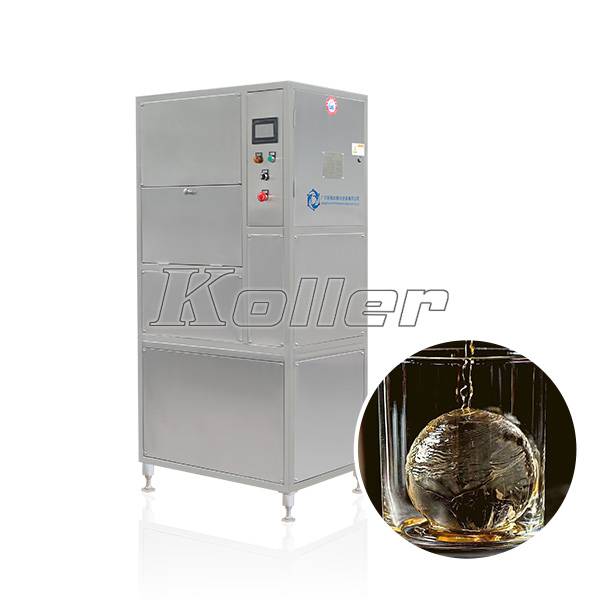
Une machine à glaçons sphériques professionnelle est un appareil robuste conçu spécifiquement pour produire des glaçons sphériques, grands, uniformes et solides. Contrairement aux machines à glaçons classiques qui privilégient le volume, ces machines misent sur la précision de la forme et la clarté visuelle pour un service de boissons haut de gamme. L'utilisation de moules en silicone manuels ou de fournisseurs de glaçons externes engendre des difficultés de production. Ces machines professionnelles résolvent ce problème en assurant une production fiable et intégrée.
- Automatisation sanitaire : Offre une alternative automatisée et économique en main-d’œuvre aux moules remplis à la main.
- Impact visuel : Améliore l'attrait esthétique des cocktails et des spiritueux haut de gamme.
- Contrôle thermique : Crée des sphères denses à fusion lente qui refroidissent rapidement les boissons tout en minimisant la dilution.
Principales caractéristiques fonctionnelles
Ces machines se distinguent par leur forme et leur rendement. Elles produisent de manière constante des sphères de glace denses et transparentes d'environ 45 mm de diamètre, parfaitement adaptées aux verres à whisky standard. Leur capacité est largement modulable en fonction de l'espace disponible.
- Volume de production : Les capacités journalières varient de 50 lb pour les unités sous comptoir à des cycles rapides de 20 à 30 secondes pour les modèles industriels.
- Systèmes d'automatisation : Les unités vont des configurations semi-automatiques aux systèmes entièrement automatisés avec bacs de stockage intégrés et transfert automatique de glace.
- Protection de qualité : Les modèles avancés intègrent une protection contre les éclats de glace pour garantir une chute parfaitement lisse de chaque sphère.
Principaux types d'équipements
Les exploitants choisissent parmi trois configurations mécaniques principales en fonction de leur programme de glace existant et de leur surface au sol.
- Machines à glaçons sphériques à congélation directe : utilisent des évaporateurs sphériques réfrigérés pour injecter et congeler l’eau directement dans des boules transparentes.
- Machines automatiques de formation de boules de glace : appliquent une pression hydraulique ou mécanique pour comprimer de la glace prédécoupée ou en flocons en sphères uniformes.
- Systèmes de glace transparente hybrides : Associez des moules de congélation directionnelle spécialisés à des congélateurs commerciaux existants pour une production haut de gamme à plus petite échelle.
Applications dans le secteur de l'hôtellerie
Les bars à cocktails artisanaux et les restaurants haut de gamme utilisent fréquemment ces machines pour servir du whisky, du bourbon et des boissons à base de spiritueux comme le Negroni. Un programme dédié à la production de glaçons sphériques permet aux salons et hôtels de luxe de garantir un service uniforme avec des glaçons sphériques dans plusieurs bars.
Cette standardisation améliore immédiatement la régularité et le dosage. En internalisant la production, les opérateurs éliminent totalement les coûts unitaires élevés et les déchets liés au transport associés à l'achat de glace de qualité supérieure auprès de fournisseurs externes.
Comment une machine à glaçons sphériques commerciale crée des sphères de glace
Les machines à glaçons sphériques commerciales utilisent la congélation directionnelle, l'eau purifiée et des moules sphériques de précision pour produire des sphères de glace denses à fonte lente en volumes commerciaux.
| Phase de production | Composant principal | Fonction principale |
|---|---|---|
| Admission et filtration | Conduite d'alimentation en eau et filtres | Élimine les sédiments et le chlore pour une pureté élevée. |
| Remplissage de moule | Moules à cavité sphérique | Elle contraint l'eau à prendre une forme ronde et uniforme. |
| Gel | Circuit frigorifique | Effectue une congélation directionnelle pour éliminer les impuretés. |
| Récolte | Sondes et décompression thermique/mécanique | Détecte l'épaisseur cible et libère la sphère. |
| Stockage | Bac isotherme | Préserve la forme et minimise la fonte avant service. |
Apport et filtration d'eau
Le cycle de production commence par l'arrivée d'eau dans le système, soit par une conduite d'alimentation directe, soit par un réservoir manuel interne. Il est impossible de produire de la glace parfaitement transparente avec de l'eau du robinet dure ou sale. Un système de filtration intégré intercepte l'eau d'alimentation afin d'éliminer les sédiments, le chlore et autres traces de contaminants. Cette grande pureté de l'eau présente un double avantage : elle protège les vannes internes de la machine contre l'entartrage et garantit une sphère de glace parfaitement transparente, sans aucune opacité disgracieuse.
Remplissage du moule et contraintes de cavité
Une fois filtrée, l'eau est dosée avec précision par la machine et acheminée vers des moules sphériques spécifiques. Ces cavités composées de plusieurs parties maintiennent l'eau fermement en place, lui conférant une forme ronde et uniforme lors de la congélation. La conception thermique du moule métallique détermine le point de départ exact de la congélation. Ce contrôle précis empêche la congélation aléatoire de l'eau, garantissant ainsi la formation d'une sphère parfaitement stable.
Le cycle frigorifique et la congélation directionnelle
Un circuit frigorifique haute performance assure la baisse de température. Le compresseur, le condenseur, le détendeur et l'évaporateur fonctionnent de concert pour extraire rapidement la chaleur de l'eau contenue dans les moules. Contrairement aux machines à glaçons classiques, ces appareils reposent principalement sur la congélation directionnelle. Cette méthode force l'eau à geler selon un parcours précis, éliminant ainsi les bords irréguliers et les déformations. Cette congélation contrôlée, plus lente et maîtrisée, repousse les impuretés et les gaz résiduels loin du front de congélation. On obtient ainsi une sphère de glace très dense, semblable à du verre.
Phase de récolte et de libération
Des sondes et des capteurs internes surveillent en permanence la glace pendant sa solidification. Lorsque le système détecte que la sphère a atteint l'épaisseur et la température cibles, la carte de contrôle interrompt le cycle de congélation. La machine déclenche alors une séquence de démoulage, soit par une brève impulsion de chaleur douce, soit par une action mécanique précise. Cette étape permet de rompre délicatement l'adhérence entre la glace et le métal froid, libérant ainsi la sphère qui se détache facilement de la cavité du moule.
Stockage et fonctionnement continu
Les sphères de glace fraîchement éjectées tombent en toute sécurité dans un bac de stockage isolé grâce à une goulotte. Cet environnement à température contrôlée préserve leur forme uniforme et empêche une fonte rapide avant le service des boissons. Une fois la récolte terminée, l'unité répète en continu le cycle complet de remplissage, de congélation et de récolte. Son fonctionnement automatique permet de maintenir des niveaux de stock optimaux et de répondre aux exigences de production commerciale à haut volume.
Sublimez vos boissons avec des billes de glace en cristal de qualité supérieure.
Voir les machines à glaçons Ball →
Les principaux composants d'une machine à glaçons en boules commerciale
Le noyau frigorifique
Au cœur de la machine se trouve un cycle de compression de vapeur standard qui crée le différentiel de température nécessaire à une congélation complète. Le système utilise un compresseur robuste pour pomper le fluide frigorigène et un condenseur — généralement refroidi par air dans les modèles sous comptoir — pour évacuer la chaleur absorbée dans la pièce. Afin de garantir une formation de glace stable, un détendeur dose avec précision le débit de fluide frigorigène entrant dans l'évaporateur. Ce débit contrôlé permet à la machine d'évacuer la chaleur uniformément, assurant ainsi une congélation solide et sans points faibles.
L'assemblage de formation de sphères
L'évaporateur de ces appareils fonctionne comme un moule à cavités multiples. Il est composé de deux demi-dômes métalliques, supérieur et inférieur, qui s'emboîtent pour former des chambres sphériques fermées et précises. Un système d'injection d'eau par le bas remplit chaque chambre. L'injection d'eau par le bas permet d'éliminer l'air emprisonné pendant le remplissage, réduisant ainsi considérablement les bulles internes et produisant une glace limpide. Ces ensembles forment simultanément des sphères solides, les configurations commerciales courantes permettant de produire jusqu'à 15 sphères par lot.
Systèmes de gestion et de filtration de l'eau
La qualité de l'eau détermine la clarté de la glace. Le système gère l'arrivée d'eau grâce à des électrovannes, garantissant un volume précis dans les chambres pour une taille de boules homogène. Des filtres à sédiments et à charbon actif intégrés éliminent les minéraux et le chlore. Cette filtration améliore directement la clarté visuelle et le goût de la glace finale. La machine utilise également des conduites d'évacuation pour éliminer l'excès d'eau de la cuve et l'eau de fonte. Un drainage adéquat évite la stagnation d'eau autour de la zone de congélation, minimisant ainsi les risques de formation de biofilm et assurant la propreté de l'équipement.
Commandes et capteurs automatisés
Une carte de contrôle centrale fait office de cerveau de la machine, en programmant avec précision le remplissage en eau, le cycle de congélation et la récolte. Elle s'appuie sur un réseau de composants pour assurer une production continue.
- Capteurs de température et d'épaisseur : vérifiez que les sphères sont entièrement solides avant de lancer le cycle de libération.
- Capteurs de niveau de trémie : Arrêt automatique de la production lorsque la trémie de stockage atteint sa capacité maximale, évitant ainsi la formation de ponts de glace et les contraintes mécaniques.
- Mécanismes de sécurité : des pressostats haute pression et des relais de protection contre le manque d’eau protègent les moteurs internes contre le fonctionnement à sec ou la surchauffe.
Structures de récolte et de stockage de glace
Une fois les sphères complètement congelées, la machine utilise un système de chauffage pour les extraire. En injectant du gaz chaud ou de l'eau tiède pour réchauffer brièvement la surface de l'évaporateur, les moules permettent un démoulage propre. La machine guide ensuite les sphères extraites à travers des déflecteurs mécaniques ou des goulottes inclinées afin d'éviter tout dommage lors de leur chute. Le produit fini est stocké dans un bac en acier inoxydable à isolation renforcée, conçu pour ralentir la fonte et préserver l'intégrité des sphères en milieu commercial.
Quels sont les facteurs qui influencent la production et la qualité de la glace ?
Qualité et température de l'eau de source
La température et la pureté de l'eau déterminent précisément le fonctionnement de votre machine. Une eau d'alimentation plus chaude oblige le système à évacuer davantage de chaleur, ce qui réduit sensiblement votre rendement. La composition chimique de l'eau influe également sur la structure physique de la glace.
- Pureté cible : Le maintien de la teneur totale en solides dissous (TDS) entre 0 et 85 ppm permet d'obtenir les meilleurs résultats visuels et gustatifs.
- Teneur élevée en TDS et en minéraux : les minéraux lourds empêchent une congélation uniforme, créant une glace trouble, fragile ou cassante.
- Contaminants : Les débris en suspension, le chlore et les composés chimiques dégradent l'aspect et l'état sanitaire du produit final.
Températures ambiantes et ventilation
Les performances de production standard sont déterminées dans des conditions de test spécifiques, généralement à 21 °C (air) et 10 °C (eau). Placer les appareils dans des espaces plus chauds garantit une production moindre. Une température ambiante élevée réduit la capacité d'une machine à refroidissement par air à évacuer efficacement la chaleur, ce qui ralentit le processus de congélation.
Une mauvaise ventilation autour de la machine restreint la circulation de l'air, ce qui accentue l'accumulation de chaleur et allonge les cycles de récolte. Des environnements de stockage chauds ou humides compromettent également la qualité de la glace en provoquant un ramollissement de sa surface, une accumulation de givre et une fonte plus rapide dans le bac.
Maintenance et assainissement des machines
Négliger l'entretien de votre équipement réduit considérablement les rendements et engendre des risques pour la sécurité alimentaire. La qualité microbiologique dépend fortement de l'hygiène. Des protocoles de nettoyage inadéquats favorisent la prolifération des bactéries à l'intérieur de la machine à glaçons, du bac ou de la zone de distribution.
- Usure mécanique : le vieillissement des composants, l’encrassement des serpentins du condenseur et l’entartrage minéral interne limitent le transfert de chaleur et diminuent les taux de rendement.
- Perturbations du débit : Les filtres obstrués et la faible pression d’eau allongent les temps de cycle et sollicitent excessivement l’équipement.
- Protocoles d'assainissement : Le détartrage et la désinfection réguliers préviennent la formation de biofilm et assurent l'efficacité des équipements et la sécurité alimentaire.
Efficacité du cycle de réfrigération
Une machine à glaçons industrielle fonctionne essentiellement comme un système de transfert de chaleur. Elle nécessite une pression de réfrigérant et des changements de phase adéquats pour une congélation homogène. Lorsque le cycle frigorifique devient instable ou inefficace, la vitesse de congélation est irrégulière.
Cette instabilité entraîne la formation de cristaux de glace fragiles ou difformes. Pour les systèmes de refroidissement à distance, il faut également tenir compte des variables d'installation. Des conduites trop longues réduisent le rendement réel par rapport aux valeurs nominales annoncées par le fabricant.
Applications commerciales courantes des machines à glaçons à billes
Bars à cocktails et salons à whisky
Les bars à cocktails et les salons de whisky utilisent des machines à glaçons sphériques spécialisées pour servir des spiritueux haut de gamme. Les barmans se servent de ces sphères parfaites pour les verres purs, les cocktails sur glace et les boissons riches en alcool comme les classiques Old Fashioned et Negroni.
- Dilution contrôlée : Un faible taux de fusion et une grande surface permettent de refroidir les spiritueux à fort degré d'alcool sans dilution rapide.
- Justification du prix : L’impact visuel des glaçons transparents dans les verres à whisky justifie un prix plus élevé pour les spiritueux de réserve.
- Dégustations : Les sphères assurent un refroidissement lent et constant pour des dégustations de whisky exclusives.
Hôtels haut de gamme et lieux de réception sur les toits
Les hôtels haut de gamme et les bars rooftop utilisent la glace sphérique pour sublimer l'expérience client. Les responsables installent des machines à glace sphérique spécialisées juste à côté de leurs machines à grand volume, séparant ainsi les cocktails premium du service de boissons standard.
- Identité de marque distinctive : Les établissements créent des présentations mémorables et personnalisées autour de leurs cocktails maison.
- Éléments marketing : Les sphères de glace transparentes servent de point d'ancrage visuel dans les photographies promotionnelles et les médias sociaux.
- Service expérientiel : les sphères enrichissent les prestations haut de gamme comme la mixologie à table ou les cocktails fumés.
Restaurants haut de gamme et programmes de cocktails artisanaux
Les restaurants intègrent des machines à glaçons sphériques pour se démarquer sur leurs cartes de cocktails et augmenter le panier moyen. Afin d'optimiser la valeur perçue, les restaurateurs réservent l'utilisation des glaçons sphériques aux places assises au bar, aux comptoirs du chef ou aux clients ayant opté pour le menu dégustation.
Les sphères de glace transparentes jouent un rôle crucial dans certains accords mets et vins. Leur forme dense contrôle la dilution tout au long de la dégustation, garantissant ainsi que le cocktail conserve son profil aromatique optimal sans devenir trop liquide.
Clubs privés et casinos
Les clubs et casinos privés utilisent les glaçons transparents comme un gage de luxe. Cette présentation renforce immédiatement l'image haut de gamme de la marque auprès d'une clientèle exigeante, s'intégrant pleinement à l'expérience VIP et contribuant ainsi à un service de boissons à forte marge, axé sur l'image.
- Salons VIP : Espaces réservés à une clientèle exclusive afin de maintenir une ambiance haut de gamme.
- Jeux à mises élevées : Sert les gros joueurs qui exigent un service de boissons haut de gamme sans dilution rapide.
- Salons à cigares : se marient parfaitement avec la dégustation lente de spiritueux lors de visites prolongées.
Lieux de réception et traiteur pour banquets
Les traiteurs utilisent des glaçons sphériques pour créer des formules de bar à plusieurs niveaux et des stands spécialisés, comme des bars à whisky dédiés aux mariages. Les barmans s'appuient sur ces sphères pour élaborer des cocktails phares lors d'événements d'entreprise, garantissant ainsi des photos parfaites des cocktails de la marque sous l'éclairage événementiel.
L'organisation d'événements exige une gestion rigoureuse des stocks. Les traiteurs produisent et stockent la glace en glaçons par lots avant l'ouverture des portes. Ils limitent l'accès à ces réserves aux personnes ayant acheté un forfait ou un billet VIP, maîtrisant ainsi les coûts tout en offrant une prestation haut de gamme.
Hôtellerie de charme et micro-bars
Les petits établissements utilisent des machines à glaçons sphériques de comptoir pour atteindre un haut niveau d'esthétique sans nécessiter un espace commercial important. Ces systèmes compacts s'intègrent parfaitement dans les salles de dégustation privées, les espaces de table du chef et les cafés-bars hybrides haut de gamme.
Bien que le volume de production quotidien reste modeste dans ces établissements, l'accent est mis exclusivement sur la qualité. Les barmans privilégient une présentation impeccable des glaçons pour une carte de cocktails signature soigneusement sélectionnée et restreinte.
Comment choisir la machine à glaçons à billes commerciale adaptée ?
Déterminer les besoins en volume et en capacité de stockage
Les machines à glaçons sphériques commerciales produisent des volumes journaliers inférieurs aux machines à glaçons classiques, car les grosses sphères mettent plus de temps à congeler. Une fournée standard prend entre 10 et 25 minutes. Il est essentiel d'adapter précisément ce rythme de production plus lent au rythme de service de votre établissement.
- Alignement de la production : Calculez votre capacité de production journalière et comparez-la à la demande de service aux heures de pointe.
- Dimensionnement du stockage : assurez-vous que le bac de stockage intégré ou le bac modulaire contienne suffisamment de glace pour couvrir les périodes de forte activité sans rupture de stock fréquente.
- Vitesse de réapprovisionnement : vérifiez le temps de récupération de la machine pour comprendre à quelle vitesse elle réapprovisionne les sphères après une utilisation intensive.
Choisissez le facteur de forme de machine approprié
L'agencement du bar détermine le choix de votre équipement. Vous devez adapter l'encombrement de la machine à l'espace disponible et à la capacité de stockage requise.
- Modèles sous comptoir : Intégrez la production et le stockage directement dans des configurations de bar compactes.
- Systèmes modulaires pour têtes uniquement : permettent des solutions de stockage personnalisées grâce à l’association avec des bacs séparés de grande capacité.
- Les appareils de comptoir : Ils constituent d'excellents éléments secondaires pour les bars clandestins à faible volume ou de véritables pièces maîtresses visuelles sur le comptoir.
Sélectionnez le système de refroidissement optimal
Le cycle de réfrigération détermine les performances de votre machine dans différents environnements. Une chaleur ambiante élevée nuit à la transparence de la glace et ralentit la production ; le choix de votre méthode de refroidissement est donc une décision opérationnelle cruciale.
- Systèmes refroidis par air : le choix le plus courant, mais ils nécessitent des environnements bien ventilés et à température modérée pour évacuer correctement la chaleur.
- Appareils refroidis par eau : Fonctionnent mieux dans les cuisines exiguës et chaudes sans ajouter de chaleur ambiante.
- Configurations à refroidissement déporté : le groupe de condensation est placé à distance du bar, ce qui réduit considérablement le bruit et la chaleur dans la zone de service.
Prioriser la qualité de la glace et la filtration de l'eau
Un cocktail de qualité exige une glaçon sphérique parfaite. De la glace trouble et fissurée annule tout l'intérêt d'acheter une machine à glaçons sphériques. L'obtention de glaçons transparents dépend fortement du mécanisme de congélation de la machine et de la composition chimique de l'eau utilisée.
- Congélation directionnelle : Sélectionnez des machines utilisant cette technologie pour éliminer les impuretés et créer des sphères d'une clarté cristalline.
- Dimensions de la sphère : Vérifiez le diamètre exact de la sphère (généralement de 2,0 à 2,5 pouces) pour assurer la compatibilité avec votre verrerie standard.
- Traitement de l'eau : installer un système de filtration d'eau à plusieurs étapes et utiliser de l'eau à faible teneur en TDS pour éliminer le tartre et prévenir la turbidité interne.
Évaluer les besoins de maintenance et les coûts d'exploitation
Les machines à glaçons spéciales exigent un entretien rigoureux. Le calcaire altère la durée des cycles et la qualité des sphères de glace. Il est essentiel de prendre en compte l'entretien quotidien et les coûts d'utilisation à long terme avant de finaliser votre achat.
- Critères d'efficacité : recherchez les certifications ENERGY STAR et les fluides frigorigènes à faible PRG pour minimiser la consommation d'électricité à long terme.
- Accessibilité : Privilégiez les machines dotées d’un système de démontage des panneaux sans outil et d’instructions de diagnostic claires pour faciliter le nettoyage quotidien.
- Réseau d'assistance : Vérifiez les conditions de garantie des composants essentiels comme le compresseur et confirmez la disponibilité locale de techniciens de service agréés.
Réflexions finales
Une machine à glaçons sphériques professionnelle permet aux bars, hôtels et établissements de boissons haut de gamme de garantir une qualité de glace constante, d'améliorer la présentation des boissons et d'assurer un service plus fluide aux heures de pointe. Comparée aux moules manuels ou aux petites machines grand public, une machine professionnelle offre une production plus stable, une meilleure efficacité et une performance plus fiable sur le long terme, idéale pour les programmes de boissons à forte demande.
Koller propose des machines à glaçons sphériques professionnelles conçues pour les établissements hôteliers et de restauration exigeant une production de glace fiable et une utilisation quotidienne simplifiée. Que vous souhaitiez moderniser votre carte de cocktails ou aménager un nouveau bar, une configuration adaptée vous permettra d'optimiser votre flux de travail et d'améliorer l'expérience client.
👉Contactez notre équipe dès aujourd'hui pour découvrir la solution de machine à glaçons en boules commerciale la mieux adaptée à votre entreprise.
Foire aux questions
En quoi une machine à glaçons sphériques commerciale diffère-t-elle d'une machine à glaçons classique ?
Les machines à glaçons industrielles classiques privilégient le volume, utilisant des évaporateurs plats ou segmentés pour produire quotidiennement des centaines de kilos de glaçons ou de paillettes standard. Les machines à glaçons sphériques industrielles, quant à elles, privilégient la précision de la production par lots au détriment du débit. Ces appareils utilisent des moules sphériques spécifiques et une congélation directionnelle pour produire de grandes sphères de 5 à 6 cm de diamètre. Le résultat : un glaçon cristallin à fonte lente, idéal pour les spiritueux haut de gamme et les cocktails raffinés.
Quels facteurs influencent la clarté des glaçons dans les machines commerciales ?
La pureté de l'eau, le sens et la vitesse de congélation déterminent la transparence de vos glaçons sphériques. Une forte concentration de minéraux dissous, de chlore et d'air emprisonné crée instantanément un cœur trouble et laiteux. Pour obtenir des glaçons parfaitement transparents, la machine doit utiliser de l'eau filtrée et une congélation directionnelle. Ce processus contrôlé permet d'éliminer les impuretés et les bulles d'air de la zone de congélation. Une vitesse de congélation plus lente empêche également la formation de microfissures et l'emprisonnement de gaz à l'intérieur de la glace.
Combien de temps faut-il pour produire un lot de boules de glace dans une machine industrielle ?
Une fois la machine à température de fonctionnement atteinte, la fabrication de glaçons sphériques prend entre 10 et 25 minutes. Les sphères de glace étant plus massives et plus denses que les glaçons classiques, leur congélation est naturellement plus longue. Notez que la première fournée de la journée est toujours plus longue. Prévoyez une attente de 20 à 30 minutes pour ce premier cycle, le temps que les moules et le circuit frigorifique atteignent leur température ambiante.
Les machines à glaçons commerciales en forme de boules nécessitent-elles un système de filtration d'eau ?
Les normes de plomberie de base exigent seulement une arrivée d'eau potable, mais faire fonctionner une machine à glaçons sphériques commerciale sans système de filtration d'eau est un moyen rapide de provoquer une panne. L'eau du robinet non filtrée déverse directement des minéraux et du chlore dans votre système. Cela nuit à la transparence de la glace, ralentit les cycles de production et provoque un entartrage rapide des pièces internes sensibles. Vous avez besoin d'un système de filtration dédié comprenant un filtre à sédiments, un filtre à charbon actif et un dispositif anti-tartre. Ce système garantit des glaçons sphériques transparents, des temps de cycle prévisibles et protège votre investissement contre les pannes prématurées.
Quel entretien est nécessaire pour une machine à glaçons à billes commerciale ?
Vous devez nettoyer et désinfecter en profondeur toutes les surfaces internes en contact avec les aliments, les réservoirs d'eau et les bacs tous les trois à six mois. Utilisez toujours des nettoyants pour machines à glaçons homologués et adaptés au contact alimentaire. Si votre bar est alimenté en eau dure ou si la machine fonctionne en continu, prévoyez un nettoyage hebdomadaire pour limiter l'accumulation de calcaire. À l'intérieur, votre personnel doit nettoyer les serpentins du condenseur tous les six mois pour assurer une bonne circulation de l'air. Vérifiez régulièrement l'étanchéité des conduites d'eau pour garantir le bon fonctionnement du cycle de réfrigération.
